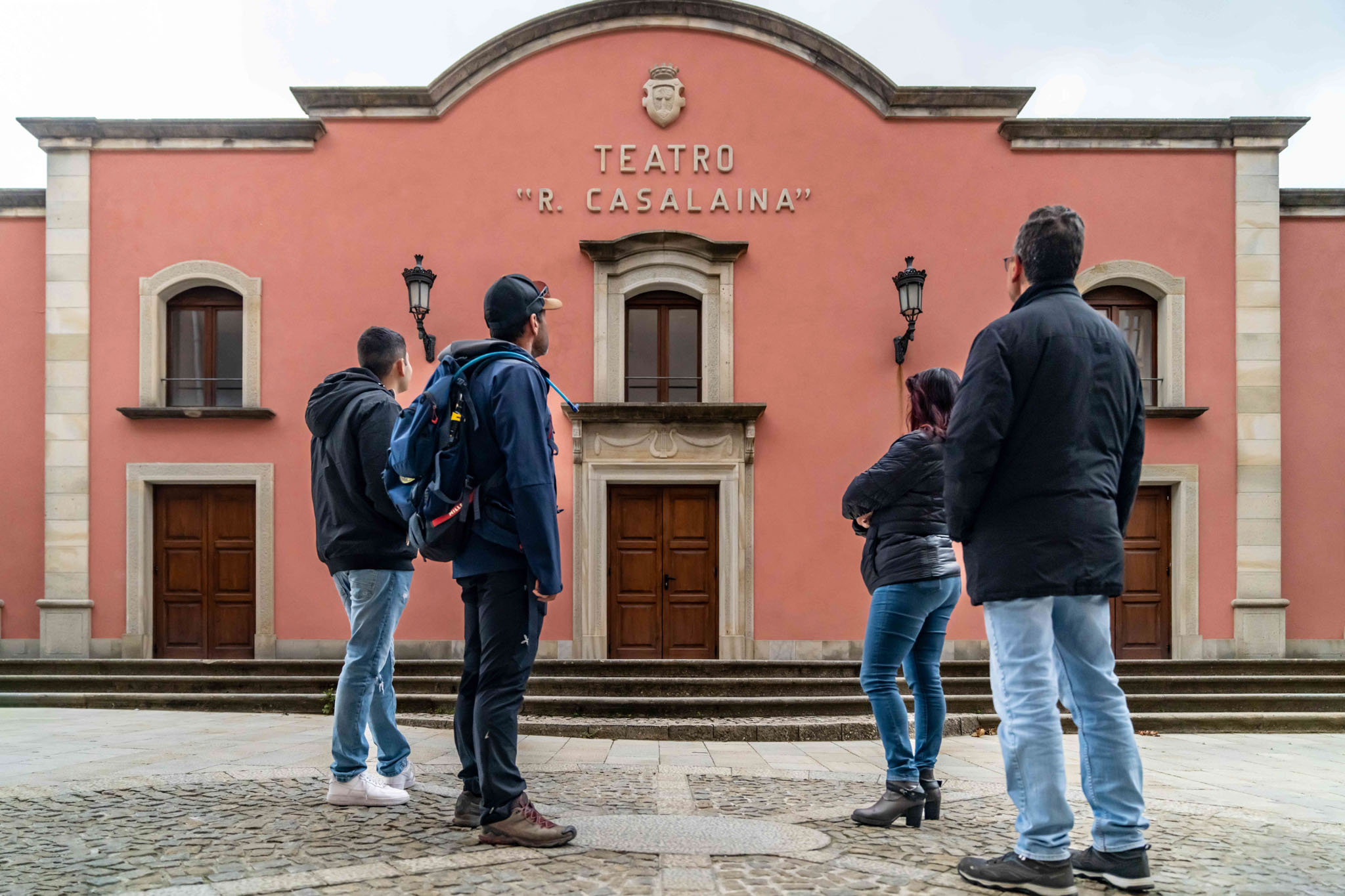


The Riccardo Casalaina Municipal Theatre, located in the charming village of Novara di Sicilia, is a true community gem: a place where history, culture, and celebration merge into an engaging atmosphere.
Construction and Origins
The building was completed in 1770, in the heart of the eighteenth century, and was conceived as a theatre—but with a dual identity: for about half a century, it also housed a “Colonna Frumentaria” (or Peculio Frumentario), which was a communal warehouse for storing grain, managed by the community to intervene in times of agricultural need.
It is still not entirely clear which spaces were dedicated to which use, but the co-existence of the theatre and the warehouse underscores how central this building was to the social and economic life of the village.
Evolution to Exclusive Use as a Theatre
At the beginning of the nineteenth century, according to the account of the anthropologist Giuseppe Pitrè, the people of Novara would gather in these very premises to attend religious performances, particularly the “Mortorio,” a dramatisation of the Passion of Christ that took place in the Peculio.
Around 1830, the warehouse function was abandoned, and in the late 1830s, 22 wealthy local families contributed to the organisation of the boxes to relaunch the theatre.
From that moment, starting in 1840, the building was used exclusively for artistic and entertainment purposes.
Structure and Restorations
Originally, the theatre featured a wooden structure with two tiers of boxes and an upper gallery. However, for safety reasons (fire hazard), the structure was demolished and rebuilt in reinforced concrete in 1958: a third tier of boxes was added, the stage was moved back, and new dressing rooms were created.
The latest internal restoration dates back to 2004, while the external restoration was completed during the pandemic period.
Naming and Cultural Significance
The theatre is named after Riccardo Casalaina, a young musician from Novara di Sicilia, considered a “new Mozart”. He died tragically in the 1908 Messina earthquake and tsunami at the age of only 28, along with his wife Dora Lucifero, who was also a musician and the daughter of Baron Lucifero of Milazzo. Casalaina was the orchestra conductor of the Vittorio Emanuele Theatre in Messina and corresponded with great composers of his time, such as Pietro Mascagni and Ruggero Leoncavallo.
Dedicating the theatre to Casalaina is a tribute to the musical vocation of the village and the value of local culture.
The Theatre’s Life Today and Popular Traditions
Today, the Casalaina Theatre is the pulsating heart of cultural life in Novara di Sicilia: it hosts shows, concerts, and events, but also plays a central role during the Carnival period.
Specifically, during the week from Shrove Thursday to Shrove Tuesday (except for Friday), the theatre is transformed into a large dance hall. At 9:30 PM, Novara families gather in the boxes, dancing ballroom, group dances, and disco music, stopping around midnight-thirty for the “schiticchiu”: a convivial break where each box displays sweet and savoury foods brought from home – bread, Maiorchino cheese, provola, salami, olives, baked ricotta, sandwiches, and sweets like pignolata Messinese and ravijò.
After the break, dancing resumes until three in the morning (it used to be until half past seven!). The culminating moment? The “Contradanza,” a quadrille guided by a choreographer who calls out the cheerful and fun steps, and when he shouts “The gentleman take the lady to the buffet,” the party officially ends.
Why Visit It
Visiting the Riccardo Casalaina Municipal Theatre means immersing oneself in an authentic piece of Sicily that combines elegance, art, popular tradition, and community. It is not just a building: it is a container of stories, music, celebration, and shared life. Within its walls echo the footsteps of generations, the rustle of ball gowns, the voice of tradition, and the energy of the present.
If you walk through the streets of Novara di Sicilia and cross its doorway, you will find a place where you can truly feel part of the community: sit in a box, observe the opposite stage, participate in a dance, or listen to a concert. It is an essential stop for anyone who wants to discover the living culture of the village and appreciate its authentic soul.